Politics
After Texas Gov. Abbott Vows to Keep Sending Buses of Migrants to Chicago, Officials Brace for Surge
Video: The WTTW News Spotlight Politics team on the day’s biggest stories. (Produced by Andrea Guthmann)
City officials are bracing for as many as 10,000 migrants to make their way to Chicago before the Democratic National Convention kicks off in less than four weeks, confident that Texas Gov. Greg Abbott will make good on his threats to cause as much chaos as possible while the city is in the national spotlight.
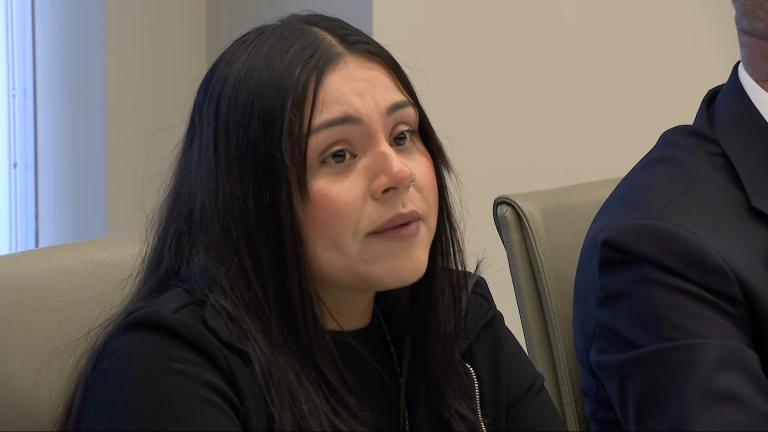
Deputy Mayor for Immigrant, Migrant and Refugee Rights Beatriz Ponce de León told the City Council’s Immigrant and Refugee Rights Committee Tuesday that city officials were “hyper prepared” for a renewed surge of buses paid for by Abbott to arrive in the Chicago area carrying migrants who crossed the southern border, requested asylum and have permission to remain in the U.S. while their cases are resolved.
“We have continued busing migrants to sanctuary cities all across the country,” Abbott said at the Republican National Convention in Milwaukee on July 17. “Those buses will continue to roll until we finally secure our border.”
At the peak of the crisis during the summer of 2023, 2,000 people arrived in Chicago from Texas every week, according to city data.
Abbott’s threat alarmed Chicago officials and prompted them to review plans to care for thousands of new arrivals in the city, said Department of Family and Support Services Commissioner Brande Knazze.
There are fewer than 5,000 open beds in the city’s migrant shelter system, officials said.
Chicago Budget Director Annette Guzman said city officials would have to scramble to cover the costs of caring for a renewed surge of migrants to Chicago.
“Those costs have not been budgeted for,” Guzman said, after presenting committee members with data that estimate the cost of operating a 15,000-bed migrant shelter system through the end of 2024 at $422.3 million.
If every bed was filled, the city would face a shortfall of $54.7 million by the end of the year, according to city projections.
It has cost $184.8 million to care for the migrants who made their way to Chicago between Jan. 1 and June 30 of this year, according to city data.
In June, city officials spent $677,310 every day to care for 5,500 migrants in 15 shelters. That is down significantly since December, when city officials spent $1.4 million per day to care for nearly 15,000 people in 27 shelters.
Originally, the city had expected to pay approximately $250 million to care for the migrants through the first six months of the year, according to the data.
However, the city’s shelter population has dropped faster than city officials expected, with fewer than 5,700 people living in 17 facilities as of Tuesday, a 10% drop in the past month and a 60% decline since Jan. 22, according to city data.
At the same time, the number of migrants in Chicago rose 30% since Jan. 22 to more than 45,000 people, according to city data. But since June 22, the number of migrants arriving in Chicago has risen just 3%, according to city data.
City officials have been warning for more than a year that Abbott would send as many buses of migrants to Chicago as possible to cause chaos in the weeks leading up to DNC, set to take place Aug. 19-22.
However, a new surge of migrants to Chicago, alongside the seasonal increase of people crossing the southern border to request asylum in advance of the convention, has yet to materialize.
A new policy implemented by President Joe Biden appears to have reduced the number of migrants allowed to enter the country after requesting asylum by 32% through the end of June, according to data released by U.S. Customs and Border Protection officials.
Ald. Andre Vasquez (40th Ward) had expected Tuesday’s hearing before the Immigrant and Refugee Rights Committee to focus on Mayor Brandon Johnson’s 60-day limit on shelter stays for most migrants. Vasquez has repeatedly called for that policy to be reversed.
Knazze and Ponce De Leon promised to revisit the policy after the convention concludes, insisting that the city needs to prioritize stability until then.
Approximately 65% of the more than 1,500 migrants evicted from city shelters since March had nowhere else to go, and continue to live in city facilities, according to city data.
All migrants evicted from a city shelter can return to the designated “landing zone” for buses from Texas at Polk and Desplaines streets in the West Loop and reapply for shelter.
Nearly 300 people who belong to families with school-age children have been forced to leave a city shelter since the beginning of June, when city officials began enforcing the eviction policy after the end of the school year. Approximately 250 people immediately returned to a city facility.
Single men and women spent an average of 118 days in city shelters, while families spent an average of 154 days in a city shelter, according to city data.
The first day of school for Chicago Public Schools is Aug. 26. It is unclear whether officials will continue to enforce the 60-day limit on families once the school year begins.
Contact Heather Cherone: @HeatherCherone | (773) 569-1863 | [email protected]